HR Analytics Platform Generated 14+ Meeting-Ready Leads with 45% Booking Rate and 3x ROI in 2 Months
An HR analytics platform needed to reach HR decision-makers who were actively evaluating workforce tools - not general HR contacts, but buyers with budget and active interest. nxlead delivered 14+ meeting-ready leads with a 45% booking rate and 3x ROI in 2 months, providing the platform with a qualified pipeline that their in-house team had struggled to build.
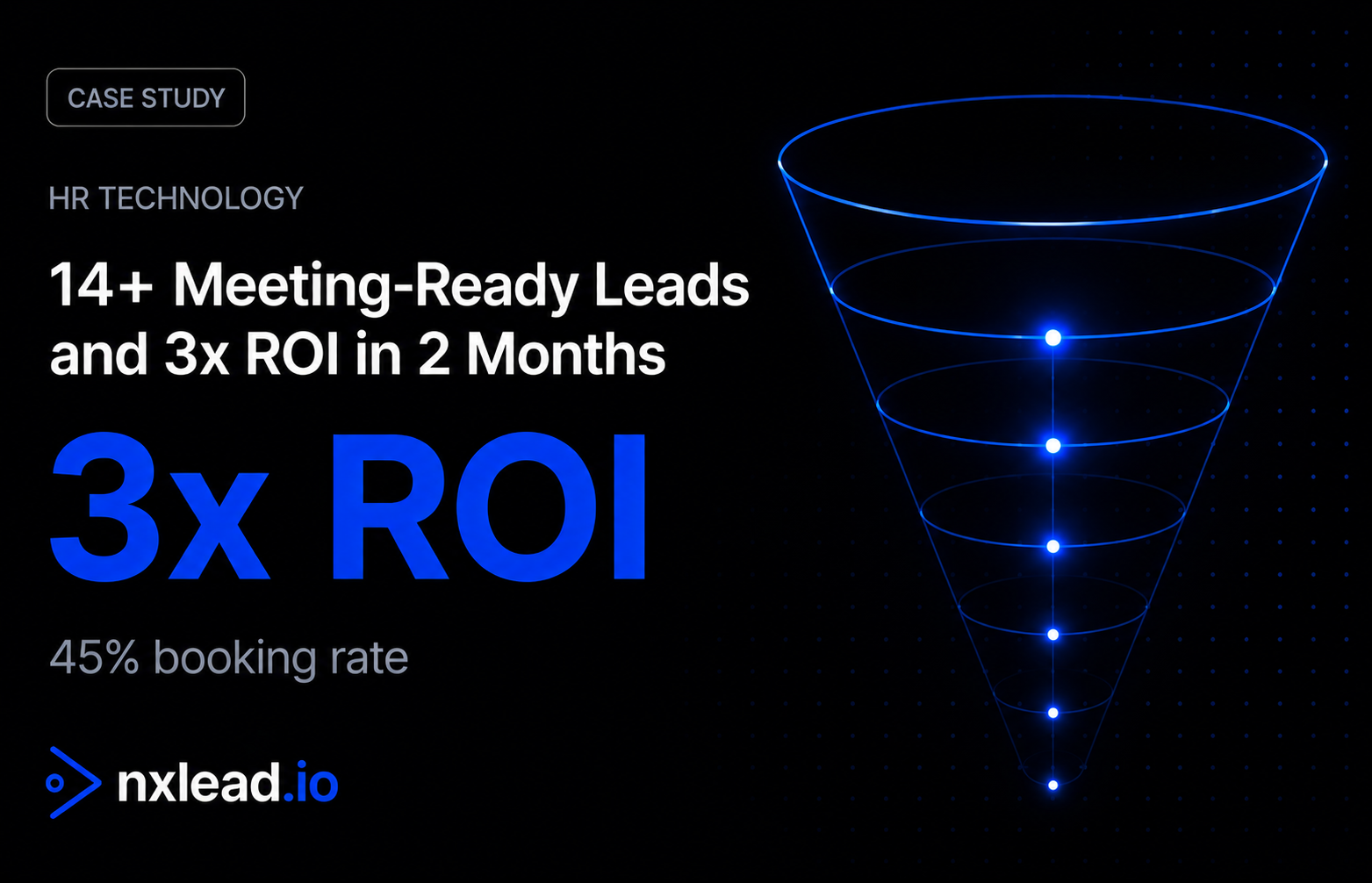
| Metric | Result |
|---|---|
| Meeting-Ready Leads | 14+ |
| Booking Rate | 45% |
| Campaign Duration | 2 months |
| Return on Investment | 3x |
About the Company
An HR analytics platform helping mid-market companies make better decisions about workforce planning, retention, and performance measurement. The platform had strong product-market fit with companies that had already adopted analytics thinking in HR - but finding those companies and the right contacts within them was their primary growth challenge.
About the Company
An HR analytics platform helping mid-market companies make better decisions about workforce planning, retention, and performance measurement. The platform had strong product-market fit with companies that had already adopted analytics thinking in HR - but finding those companies and the right contacts within them was their primary growth challenge.
What We Did
nxlead built a precise list of HR Directors, VPs of People, and Chief People Officers at mid-market companies in industries with high workforce analytics maturity - technology, financial services, and professional services. We crafted outreach that led with workforce cost reduction and retention improvement outcomes, positioning the platform as a decision-support tool rather than a data product.
LinkedIn outreach targeted the same audience to build familiarity before cold email sequences delivered the conversation starter. Every follow-up was customized by industry to reflect relevant workforce challenges.
What We Did
nxlead built a precise list of HR Directors, VPs of People, and Chief People Officers at mid-market companies in industries with high workforce analytics maturity - technology, financial services, and professional services. We crafted outreach that led with workforce cost reduction and retention improvement outcomes, positioning the platform as a decision-support tool rather than a data product.
LinkedIn outreach targeted the same audience to build familiarity before cold email sequences delivered the conversation starter. Every follow-up was customized by industry to reflect relevant workforce challenges.
"We were surprised by the quality of the leads. These were HR directors who were actually ready to evaluate new tools - not just curious."- VP of Sales
Why It Worked
The 45% booking rate came from two things: precision targeting and outcome-led messaging. Reaching the right people - senior HR decision-makers with analytical orientation - meant every conversation was with someone who could appreciate the platform's value. Framing the platform around workforce cost reduction rather than analytics features made the relevance immediate and the conversation easier to start.
Frequently Asked Questions
How do you reach HR decision-makers rather than generic HR contacts?
We filter by title, seniority, and company size to ensure every contact has both the authority and the likely budget to evaluate HR technology. For this campaign, we targeted VP-level and director-level People and HR contacts at mid-market companies - excluding junior generalists and administrative roles that would not be involved in tool purchasing decisions.
What made the messaging resonate with HR technology buyers?
HR technology buyers are skeptical of feature lists - they need to see how a tool solves a specific problem they recognize. By leading with workforce cost and retention outcomes rather than analytics capabilities, the platform spoke the language of business impact rather than product features. This made the relevance immediate for HR leaders accountable to business metrics.
How does a 45% booking rate compare to industry averages?
A 45% booking rate - meaning nearly half of all interested contacts booking a meeting - is significantly above typical B2B outreach benchmarks. This is a reflection of precise targeting rather than volume-based outreach. When you reach fewer people with better fit, the conversion at every stage is higher than reaching a large broad audience and hoping some percentage qualifies.